DIY Roof Cleaning: Why It's Rarely Worth the Risk
The moss on your roof is bothering you, you've got a ladder in the shed and a pressure washer in the garage, and it's tempting to just get up there and sort it yourself on a dry Saturday. Plenty of people think the same way, and every year plenty of them regret it. A roof looks like a job you can handle until you're actually up there.
Cleaning your own roof isn't like washing the car. It combines working at height, slippery surfaces, delicate old materials, and the wrong tools doing quiet damage, and any one of those can turn a saved afternoon into a hospital trip or a repair bill. Here's an honest look at why DIY roof cleaning rarely pays off in a place like Manchester.
The quick answer: DIY roof cleaning is rarely worth it because the risk of a fall is serious and the common tools, ladders and pressure washers, do real damage to roofs, often costing more than a professional clean.
1. The Fall Risk Is Real
The most serious problem with DIY roof cleaning is the height. Falls from ladders and roofs cause severe injuries every year, and a fall from a two-storey terrace onto a hard yard or path is not something you walk away from. No amount of moss is worth that gamble.
Manchester's weather stacks the odds against you too. Roofs and ladders here are damp far more often than they're dry, and moss makes tiles slick as ice underfoot. Even a bright day rarely means a properly dry roof, so you're often working on a surface that's more slippery than it looks from the ground.
2. Pressure Washers Wreck Roofs
The tool most people reach for is the one that does the most harm. A pressure washer blasts the moss off fast, which feels like success, but it also strips the protective surface off the tiles and drives water up under them. What looks clean today becomes leaks and frost damage within a year or two.
This hits hard in Manchester, where so many terraces still wear their original Welsh slate. That slate has softened over a century of weather, and a pressure washer can crack and pit it in seconds. Once you've damaged old slate there's no undoing it, and a few cracked tiles can cost far more than the clean ever would have.
3. It's Easy to Do More Harm Than the Moss
Moss is a slow problem, but a clumsy clean is a fast one. Walking on tiles cracks them, catching a ladder against the gutter bends it, and scrubbing too hard lifts the surface off the tile. You can easily leave your roof in worse shape than the moss ever would have, and the damage often shows up later as a leak.
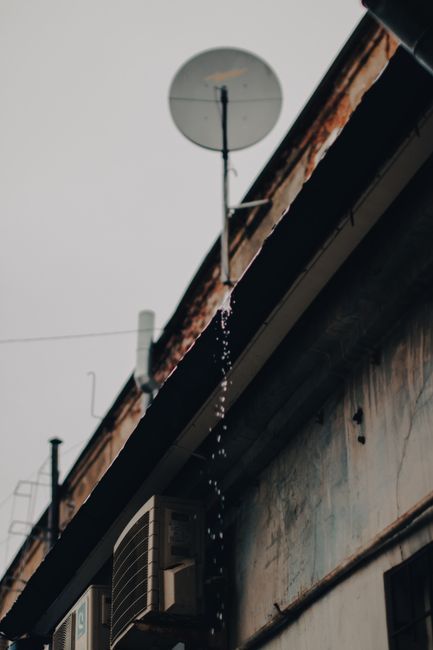
There's also the matter of knowing what you're looking at. A professional up there spots a cracked tile or lifting flashing and works around it, while someone doing it once might stand on the exact spot that then gives way. On the older housing around Levenshulme and Rusholme, that experience is the difference between a clean and a repair.
4. The Moss Just Comes Back
Even a careful DIY job usually misses the step that makes cleaning worthwhile. Scraping the visible moss off does nothing about the spores left behind, and without a biocide treatment the roof greens over again quickly. In Manchester's damp air, you can be back where you started within a year.
So even if you avoid the fall and the damage, you've often just bought yourself a repeat of the same hard, risky job next year. A proper clean with a biocide keeps the roof clear for far longer, which means the professional route isn't only safer, it actually lasts, rather than needing doing again each wet season.
5. The Right Kit You Probably Don't Have
Doing the job properly needs more than a ladder and a hose. Safe access equipment, low-pressure systems, the right brushes, and a proper biocide all matter, and buying or hiring that lot for a one-off clean rarely makes sense. The pressure washer you already own is exactly the tool you shouldn't use.
There's the gutter side of it too. A lot of the debris from a roof clean ends up in the gutters, and clearing high gutters safely usually means ground-based vacuum gear rather than leaning off a ladder. Set against buying kit, taking the risk, and still not getting the lasting result, paying someone set up for it starts to look like the sensible option.
6. When a Professional Simply Makes Sense
There's no shame in deciding a roof is a job for someone else. It's high, it's slippery, the materials are delicate, and the tools that work are not the ones in most sheds. A trained cleaner brings the access gear, the gentle method, and the aftercare, and does it without risking a fall.
Weigh it up honestly and the maths usually favours the professional. Set the cost of a clean against a cracked roof, a hospital visit, or doing the whole thing again next year, and the DIY saving mostly disappears. For most Manchester homes, letting someone experienced handle the roof is the calmer and cheaper choice in the end.
- Falls are serious: Working at height on damp, mossy tiles is the biggest and most dangerous risk.
- Wrong tools: Pressure washers strip tiles and crack old Welsh slate, causing leaks later.
- Hidden damage: Walking on tiles and scrubbing too hard can leave the roof worse than the moss did.
- Short-lived result: Without a biocide, the moss regrows fast in Manchester's damp climate.
- Kit and know-how: Safe access, gentle systems, and experience are what make the job worthwhile.
Frequently Asked Questions
Is it really that dangerous to clean my own roof?
Yes. Falls from ladders and roofs cause serious injuries every year, and damp, mossy tiles are especially slippery. The height alone makes it a job worth thinking hard about.
Can't I just use my pressure washer carefully?
Not safely. Even used carefully, high pressure strips tile surfaces and forces water underneath, and on old slate it cracks tiles. The tool itself is the problem, not just how you aim it.
What's the worst that can happen with DIY roof cleaning?
Beyond a fall, you can crack tiles, damage slate, bend gutters, and cause leaks that cost far more to fix than a professional clean. The damage often shows up months later.
If I clean it myself, will the moss stay away?
Usually not for long. Without a biocide treatment the spores remain and the roof greens over again within a year in Manchester's damp climate, so the effort is soon undone.
Is a professional clean really cheaper in the end?
Often, yes. Once you factor in hire kit, the risk of damage or injury, and having to redo it, the DIY saving usually vanishes, and a proper clean with aftercare lasts far longer.
Rather leave the roof to someone who does it safely?
Ben's Roof Cleaning takes the risk out of roof cleaning across Manchester and Greater Manchester, with over 15 years of experience. Get in touch or call 0161 388 3239
for a free, no-obligation quote.
Keep Your Feet on the Ground
DIY roof cleaning promises a quick saving and often delivers a fall, a cracked roof, or a job you're doing again by next winter. The moss will always come back, but a proper clean keeps it away far longer and keeps you safely off the ladder. In a wet, slippery city like this one, that's usually the smarter call.