Why Rainy Manchester Is Perfect for Roof Moss
Manchester and rain go together in everyone's mind, and the reputation is earned. If you live here, you know a dry week feels like a small miracle. Your roof knows it too, because all that rain makes it one of the best places in the country for moss to set up home.
Whether your house is a terrace in Levenshulme or a semi out in Didsbury, the city's famously wet weather shapes what happens up on your roof. Understand why moss loves Manchester so much and keeping it under control gets a lot easier. Here's what's going on.
The quick answer: Manchester grows heavy roof moss because the city is one of the wettest in England, the Pennines keep the rain coming, the air stays humid, and shaded terrace slopes with old porous slate never get a chance to dry out.
1. Manchester Really Is That Wet
The rainy city nickname isn't just a joke. Manchester gets somewhere around 800 to 870mm of rain a year, well above the drier eastern half of England, spread across a lot of days rather than a few big downpours. That pattern is what matters for moss.
Moss doesn't need heavy rain, it needs the roof to stay wet. Frequent rain, day after day, keeps slates damp almost constantly. A roof that never gets a proper chance to dry out is exactly what moss wants, and Manchester provides that for much of the year.
2. The Pennines Keep the Rain Coming
Manchester sits right up against the western edge of the Pennines. Wet air blowing in off the Irish Sea hits those hills, is forced upward, cools, and drops its rain, a lot of it right over the city and the towns around it.
That's why the rain here can feel relentless. The geography practically guarantees it. For your roof, it means the damp keeps getting topped up, and any moss already growing gets a steady drink to keep it thriving through most of the year.
3. Humid Air Keeps Slates Damp
It's not just the rain. Manchester's air holds a lot of moisture, and humidity keeps a roof damp even between showers. Morning mist, grey overcast days, dew that lingers, all of it slows the drying that would otherwise hold moss back.
On a bright, breezy day a roof dries quickly and moss struggles. Manchester gives fewer of those days than most places. The result is roofs that stay damp longer, and moss that grows thicker and faster than it would in a drier, sunnier city.
4. Shaded Terrace Slopes Stay Green Year-Round
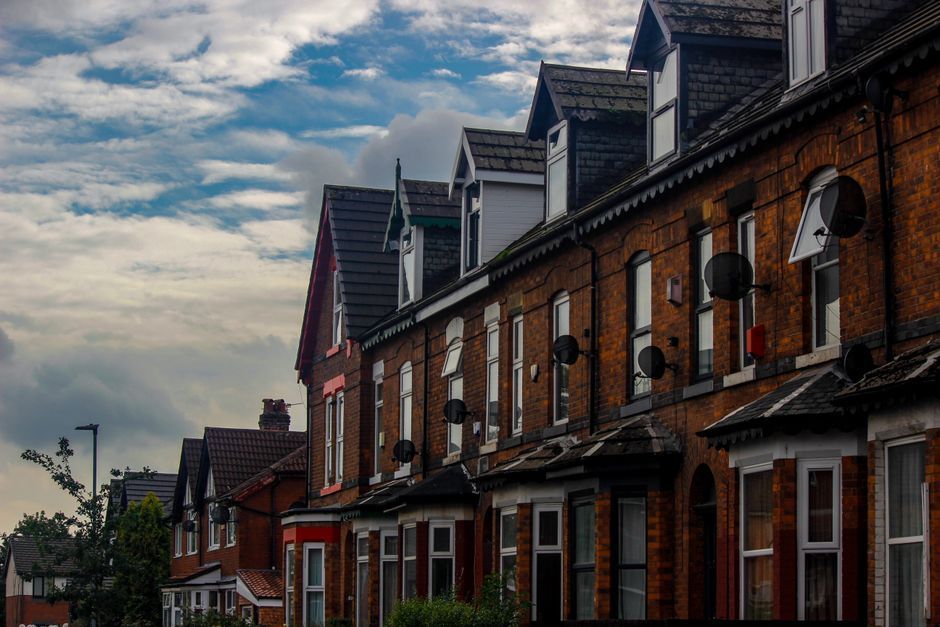
Manchester is a city of Victorian terraces, and half of every terraced roof faces away from the sun. North and east-facing slopes get little direct light, especially through the long grey months, so they stay cool and damp far longer than the sunnier side.
Sun and its UV are what hold moss back. A slope that barely sees it stays green all year. Walk down a street in Rusholme or Fallowfield and you'll often spot one side of a roof thick with moss while the other side, catching more light, stays comparatively clear.
5. Old Manchester Slate Gives Moss Its Grip
The city is packed with Victorian and Edwardian terraces, built in red brick to house the workers who powered the cotton mills. Most were roofed in Welsh slate brought in by rail and canal, and that slate is a century old or more now.
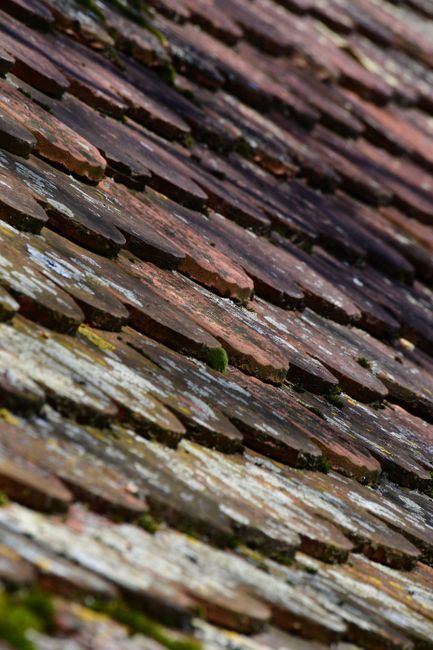
Age matters. Decades of Manchester rain leave the slate surface rough and pitted, and every tiny groove gives a moss spore somewhere to lodge and root. Newer glazed tiles shed spores more easily. The weathered slate on a Whalley Range or Chorlton terrace is a welcome mat for moss to settle and spread.
6. Once It Takes Hold, It Feeds Itself
Moss doesn't stay in one tidy patch. It throws off spores that the wind spreads across the whole roof, and every clump holds water against the slate beneath it. In a climate as wet as Manchester's, that trapped water works into gaps and lifts slate edges over time.
Here are the signs the moss on your roof has moved past a cosmetic problem:
- Moss clumps in the gutters: spongy lumps washing down and blocking the flow, backing water toward your walls.
- Green streaks down the slates: growth spreading downward from the ridge across the roof.
- Slates staying dark: patches holding damp long after any dry spell, which in Manchester is rare enough to notice.
- Moss debris in the garden: chunks dropping off on their own, a sign the layer is thick and loose.
- Damp on upstairs ceilings: moisture getting in where moss has lifted slate edges.
Frequently Asked Questions
Is moss actually harmful to a Manchester roof?
Yes. It traps water against the slate, and when a frost hits, that water freezes, expands, and cracks the surface. It also blocks gutters and lifts slate edges, so in a wet city like this it's worth clearing before it spreads.
Can I just scrape the moss off myself?
Better not to. Terraced roofs are high and steep, wet slate is treacherous, and hard scraping damages the surface. Professional soft washing removes moss without the fall risk or the harm.
How often should a Manchester roof be cleaned?
Given the rain, most benefit from a clean every two to three years, sometimes sooner on a shaded or tree-covered slope. A look each autumn tells you how yours is doing.
Will the moss come back after cleaning?
Not for a good while. A soft wash lifts the moss and a biocide treatment kills the spores left behind, which slows regrowth for years rather than months, even in Manchester's damp.
Is there any point cleaning it if it just rains again?
Definitely. Rain alone doesn't remove moss, it feeds it. A proper clean and treatment clears the growth and holds it back, so the rain has far less to work with afterward.
Watching the moss thrive on your roof?
Ben's Roof Cleaning clears moss and cleans roofs across Manchester and Greater Manchester, with over 15 years of experience. Get in touch or call 0161 388 3239
for a free, no-obligation quote.
The Rain Won't Stop, So Stay Ahead of the Moss
Manchester's rain is part of the deal, and it isn't going anywhere, which means moss will always find your roof if you let it. The aim isn't to fight the weather, it's to stop the moss building into the thick, slate-lifting layer that causes real damage. A clean every couple of years and a treatment to knock the spores back keeps your roof sound through whatever the Manchester sky throws down.