How Blocked Gutters Lead to Damp Walls
You keep seeing a dark patch spreading on an inside wall, and you can't work out where it's coming from. Nine times out of ten in Manchester, the trail leads straight back to a gutter that stopped doing its job months ago. Damp walls rarely start inside the house, they start up at the roofline.
When a gutter blocks, rainwater has nowhere to go but over the edge, and it ends up soaking the wall below instead of running away down the pipe. Given how much rain this city gets, that's a lot of water hitting your brickwork day after day. Left alone, it works its way through and shows up as damp inside.
The quick answer: Blocked gutters overflow and pour water down your external walls, saturating the brickwork until moisture penetrates through to the inside, which is why clearing gutters is one of the simplest ways to prevent damp.

1. Why Gutters Block in the First Place
Gutters are designed to catch water off the roof and carry it away, but they catch everything else too. Moss washing down off the slate, leaves from the street trees, grit, and general muck all collect in the channel over time. In a wet city, that debris stays soggy and packs together into a solid plug.
Manchester makes this worse than most places. The constant damp keeps roofs mossy, and clumps of that moss regularly slide down into the gutter, especially on the older terraces where slate roofs shed growth all year. Add the autumn leaf drop in tree-lined suburbs like Chorlton and Withington, and gutters fill up fast.
2. What Happens When the Water Overflows
Once the channel is full, rainwater can't reach the downpipe, so it brims over the front edge of the gutter and falls straight down the wall. Instead of a controlled run-off into the drain, you get a sheet of water sluicing across the brickwork every time it rains. And in Manchester, it rains a great deal.
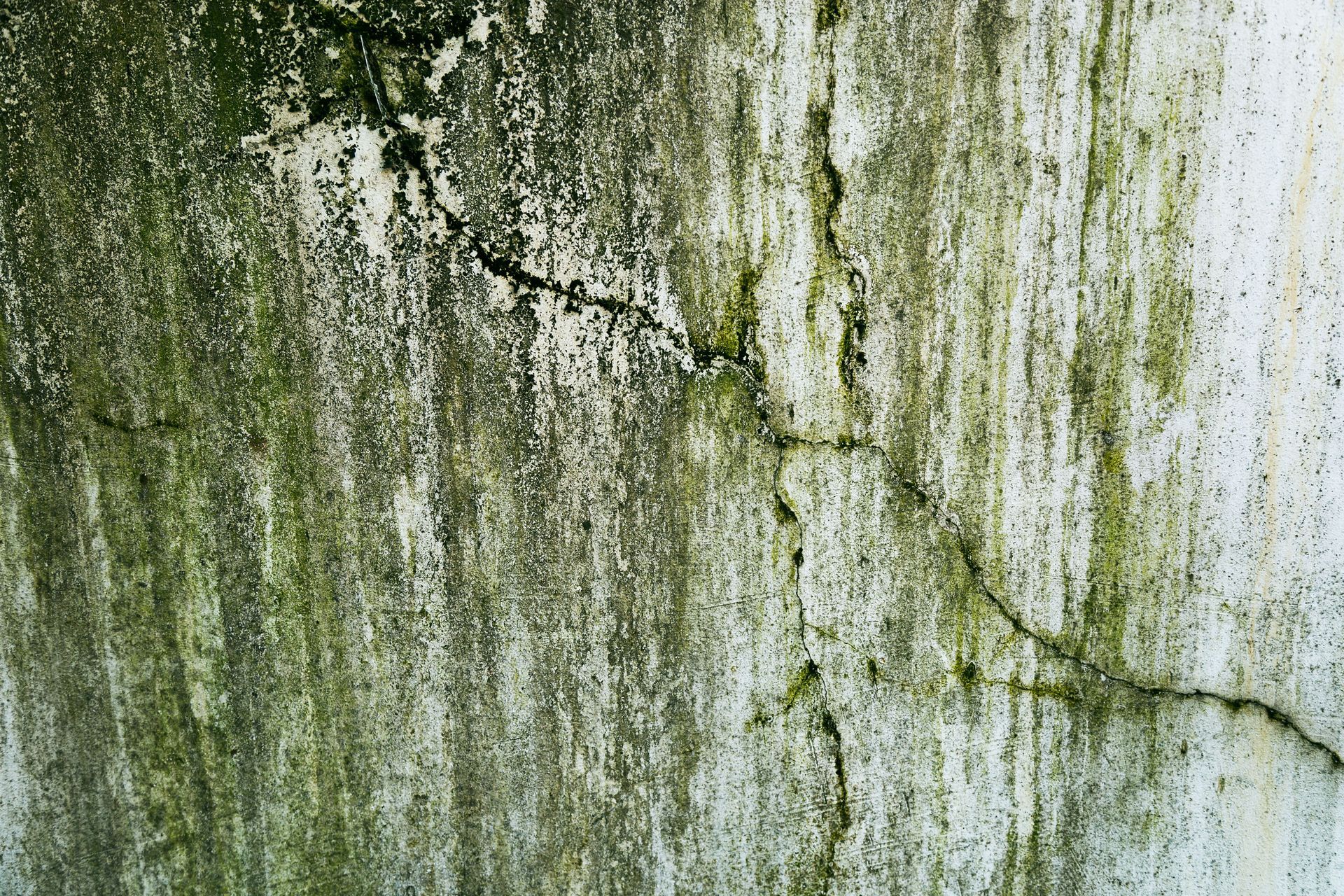
That overflow tends to hit the same strip of wall over and over. You'll often spot a green or brown streak on the render or brick directly below the blockage, which is the tell-tale sign the gutter above has been spilling for a while. The wall never gets a chance to dry out between downpours.
3. How Water Gets Through the Brickwork
Brick and mortar aren't fully waterproof. They can shrug off normal rain that lands and drains away, but they can't cope with being kept constantly wet. When a section of wall is soaked day after day by an overflowing gutter, the moisture is drawn deeper into the masonry until it reaches the inside face.
Many Manchester terraces have solid brick walls with no cavity to stop water crossing, which is common in housing built for the cotton mill era. On those walls, penetrating damp has a straight path from the wet outside brick through to the plaster inside. That's when the patch appears on your bedroom or landing wall.

4. The Damage You Don't See Straight Away
The damp stain is only the visible part. Behind it, constant moisture rots timber, lifts plaster, and feeds black mould that spreads across the wall and into the corners of the room. Left long enough, it can reach floor joists and skirting, turning a gutter clean into a proper repair bill.
There's a health side too. Persistent damp and mould in a bedroom aren't just unsightly, they affect the air you breathe, which matters more in the older, harder-to-ventilate terraces across inner Manchester. Sorting the cause early keeps a small maintenance job from becoming a much bigger and more expensive problem.
5. Spotting the Problem Before It Spreads
You can catch this early without going near the roof. Next time it's pouring, step outside and look up at your gutters. If you see water cascading over the edge or spurting from a joint rather than running to the downpipe, that gutter is blocked and your wall is getting soaked right then.
On a dry day, walk around the house and check the walls just below the guttering for staining, green algae, or damp-looking brick. Inside, keep an eye on the upstairs walls that back onto those spots. The sooner you connect an inside stain to an outside overflow, the cheaper the fix.
6. Keeping Gutters Clear the Safe Way
The fix itself is straightforward: keep the gutters clear so water can drain properly. On a low single-storey extension you might manage it yourself from a sturdy ladder, but reaching the main guttering on a two or three-storey Manchester terrace is a different matter, especially when everything is wet and slippery.
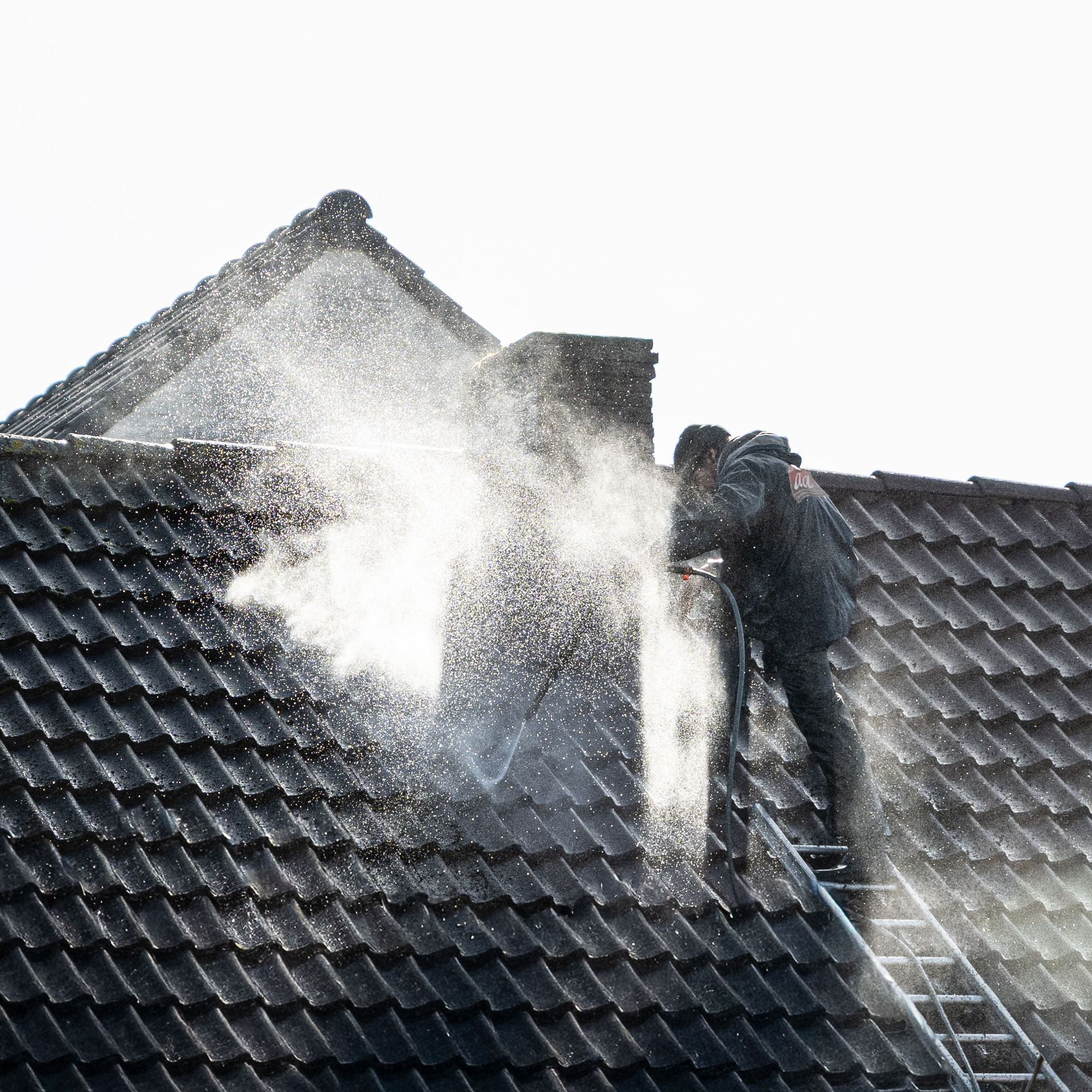
A professional gutter clean sorts it without the risk. Regular clearing matters most here because our roofs shed moss constantly, so gutters fill again quicker than in drier parts of the country. Pairing a gutter clean with a roof soft wash, which uses low-pressure water and a biocide treatment to slow moss regrowth, keeps the whole system flowing for longer.
- Moss and leaves: The main culprits, sliding off slate roofs and dropping from street trees into the channel.
- Overflow streaks: Green or brown marks on the wall below the gutter show it's been spilling.
- Solid brick walls: Many older Manchester terraces have no cavity, so water crosses straight through.
- Hidden damage: Rotten timber, lifted plaster, and mould often follow the visible damp patch.
- Regular clearing: Our wet climate refills gutters fast, so they need checking more often.
Frequently Asked Questions
How do I know the damp is from my gutters and not rising damp?
Gutter damp usually appears higher up a wall and lines up with an overflow outside, while rising damp starts near the floor. If the stain sits below a gutter that spills when it rains, the gutter is the likely cause.
How often should I have my gutters cleared in Manchester?
At least once a year is a sensible minimum, and twice is better here because our damp climate keeps roofs mossy and gutters fill quickly. Homes under heavy tree cover often need clearing more often.
Can a blocked gutter really cause damage inside the house?
Yes, and it's more common than people think. Water pouring down the same patch of wall for months soaks through the brickwork and shows up as damp, mould, and rotten plaster on the inside.
Will clearing the gutter fix the damp on its own?
Clearing the gutter stops the source, but a wall that's been saturated for a long time needs time to dry out. Sorting the overflow early means the wall recovers far more easily than one left wet for years.
Is it safe to clear my own gutters?
On a low extension with a stable ladder, carefully, perhaps. On a full-height Manchester terrace, wet and mossy underfoot, it's genuinely risky, and it's the sort of job best left to someone with the right access equipment.
Noticed damp walls or overflowing gutters?
Ben's Roof Cleaning offers roof cleaning, moss removal, and gutter cleaning across Manchester and Greater Manchester, with over 15 years of experience. Get in touch or call 0161 388 3239
for a free, no-obligation quote.
Sort the Gutter and You Sort the Wall
Damp walls feel like a big, mysterious problem, but the cause is often sitting right there at the roofline, quietly overflowing every time it rains. Keeping your gutters clear is one of the cheapest and most effective things you can do to protect your home in a city that throws this much water at it. Catch the overflow early, and you spare yourself the far bigger job of putting right the damage it leaves behind.